



Visit the Dordogne Valley
The Dordogne Valley is a region that is easy to fall in love with. It charms visitors with its rich historical heritage and the beauty and diversity of its natural landscapes.
Visitors flock to discover the typical villages that make up the region, as well as the castles, manor houses, and gardens that shape its landscape.
Vacationers also go there to hike, climb the Dordogne by barge, explore wide open spaces by bike... in short, enjoy a variety of outdoor activities.
Where is the Dordogne Valley located?
Known in particular for its prehistoric caves and medieval castles, enhanced by its magnificent natural surroundings, the Dordogne Valley comprises several towns and villages located in three regions (Nouvelle-Aquitaine, Occitanie, and Auvergne-Rhône-Alpes) and six departments (Puy-de-Dôme, Cantal, Corrèze, Lot, Dordogne, and Gironde).
The region also owes its appeal to its many medieval towns, which are among the "most beautiful villages in France."
Three of them are located in the Lot department in Occitanie (Autoire, Carennac, and Loubressac) and three others in Corrèze in Nouvelle-Aquitaine (Collonges-la-Rouge, Turenne, and Curemonte).
In addition, there are ten other listed villages in the Dordogne department, including Castelnaud-la-Chapelle, Beynac, La Roque-Gageac, Domme, and Monpazier.
Other must-see destinations in the valley of castles and gardens include Argentat (Corrèze), Brive-la-Gaillarde (Corrèze), Bergerac (Dordogne), Saint-Emilion (Gironde), and Libourne (Gironde).
Historical heritage in the Dordogne Valley
The Dordogne Valley is one of the areas that bears traces of the first human communities that settled in Europe several thousand years ago. These distant ancestors lived in caves whose walls are decorated with paintings and engravings depicting mainly animals, particularly those they hunted. These cave paintings provide us with some insight into the environment and way of life of these prehistoric communities.
Among the decorated caves in the Dordogne Valley, the prehistoric Merveilles Cave and the Cougnac Caves are particularly noteworthy.
The region also boasts numerous caves with stalactites and stalagmites, including the Lacave caves and the Lascaux caves. The Padirac chasm is another of the region's must-see attractions.
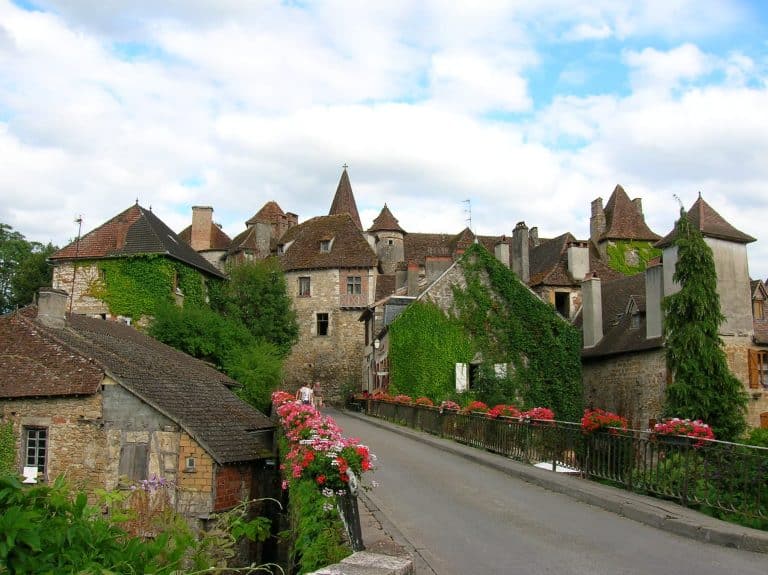
The Dordogne Valley is also home to castles, manor houses, and gardens. These places tell some of the most important stories in the region's history. For example, the castles of Castelnaud and Beynac were sworn enemies for a long time during the Hundred Years' War.
Visitors are also interested in the Château des Milandes, a sumptuous residence where Josephine Baker found refuge at the beginning of the German occupation. It was also here that the woman then known as the "Black Venus" agreed to gather information from senior foreign military and political officials on behalf of French military intelligence.
The architectural heritage of the Dordogne Valley also includes iconic buildings such as the Château de Montal, the Tours de Merle, the Château Fénelon, the Château de Hautefort, and the Château de Vassinhac. The castles of Pannonie, Tours Saint-Laurent, and Rocamadour also attract many visitors.
The Dordogne Valley is also renowned for its numerous parks and gardens. Among the must-see attractions are the Gardens of Eyrignac, the Gardens of the Imagination, the Water Gardens, the Hanging Gardens of Marqueyssac, and the Gardens of the Château de la Treyne, to name but a few.
The most beautiful villages in the Dordogne Valley
The Dordogne Valley is renowned for its traditional villages. We have selected six of the most beautiful villages in France located in the Dordogne Valley, which are also among the best known in the region:
- Autoire: Located in the Lot department, Autoire offers a peaceful setting enhanced by beautiful manor houses flanked by turrets, mansions, castles... All these residences have earned the village the nickname "Little Versailles." Alongside these prestigious residences, Autoire also boasts numerous half-timbered houses. The setting also includes a Romanesque church, a fountain, square dovecotes, and small shops showcasing local art and gastronomy.
- Carennac: Also located in the Lot department, on the banks of the Dordogne River, Carennac's must-see attractions include Renaissance houses with carved windows surrounding the Château des Doyens and the 11th-century Cluniac priory. Visitors are also interested in the Church of Saint-Pierre, known for its carved tympanum, cloister, and chapter house, which houses a magnificent 15th-century Entombment.
- Loubressac: This hilltop village in the Lot department offers breathtaking views of the Dordogne, Bave, and Cère valleys. It is also one of the best places to admire the castles of Castelnaud, Montal, and Saint-Laurent-les-Tours.
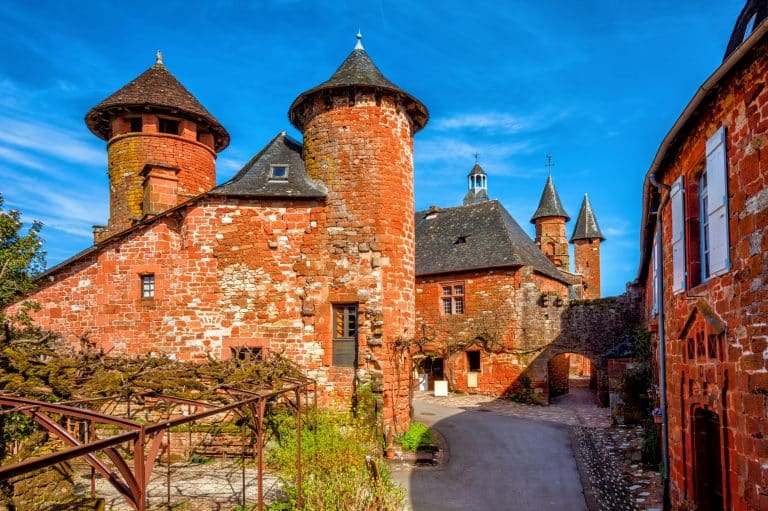
- Collonges-la-Rouge: Castles and noble houses with red sandstone facades, pepperpot towers, a church with a limestone tympanum, the Chapelle des Pénitents with its modern stained glass windows... These are just some of the buildings that make up the rich architectural heritage of Collonges-la-Rouge, located in the Corrèze part of the Dordogne valley.
- Curemonte:Also located in Corrèze, Curemonte has three private castles and just as many fountains and churches. Visitors can also admire the architecture of beautiful noble houses and discover a hall housing a 16th-century cross barrel.
- Turenne: Built on the side of a limestone hill, this medieval village in Corrèze retains many traces of its history, including the César Tower, which dominates the surrounding green landscape.
The Dordogne River
The Dordogne River is one of France's most iconic waterways, with some even calling it the "most beautiful river" in the country. Starting as a torrent, its gorges wind through the volcanic landscapes of the Dore and Cantal mountains and the forests of Limousin. It then becomes a river, crisscrossing the limestone landscapes of the Quercy plateaus and the cliffs of Périgord. Finally, as a river, it flows into the coastal plain of Bordeaux.
The Dordogne Gorges, dotted with large hydroelectric dams, constitute a true national industrial heritage site. They are surrounded by deep forests and dominated by the Château de Val.
The Dordogne Valley is located on the routes leading to Santiago de Compostela, where pilgrims and tourists can admire the Sanctuary of Notre-Dame de Rocamadour, classified as a Grand Site de France in 2011.
In the Périgord region of Dordogne, the landscape is characterized by limestone cliffs dotted with cave dwellings. The area has numerous rocky outcrops that form lookout points offering breathtaking views of the Dordogne River and its meanders. There is no shortage of water activities in the Dordogne Valley. In particular, you can try your hand at canoeing on the Dordogne.
What to do in the Dordogne Valley?
Castles, fortified towns, gardens, villages, prehistoric sites... there are many places worth visiting in the Dordogne Valley:
- Beynac Castle: This stone sentinel is one of many strongholds that have marked the history of the Périgord region, particularly during the Hundred Years' War. Nine hundred years old, Beynac Castle was long the sworn enemy of Castelnaud Castle during this long period of conflict.
- The bastide of Monpazier: Located between Sarlat and Bergerac, Monpazier is one of the nine "most beautiful villages in France" in the Périgord Noir region. Classified as a "Grand Site de France," this medieval town boasts many treasures, including a 13th-century bastide.
- The historic center of Sarlat: Capital of the Périgord Noir region and classified as a city of art and history, Sarlat is home to dozens of listed or classified historic monuments (the Manoir de Gisson, Saint-Sacerdos Cathedral, etc.), especially in its historic center.
- The Padirac Cave: The site is considered one of France'smost important geological attractions. The cave is known for its underground river. After a dizzying descent of over 100 meters, explorers—both professional and amateur—have the chance to admire the Grande Pendeloque, a giant stalactite 60 meters high...
- The Lascaux IV cave: Lascaux IV allows visitors to admire a life-size reproduction of the paintings and engravings (created between 17,000 and 19,000 years ago) that adorn the walls of the Lascaux cave.